
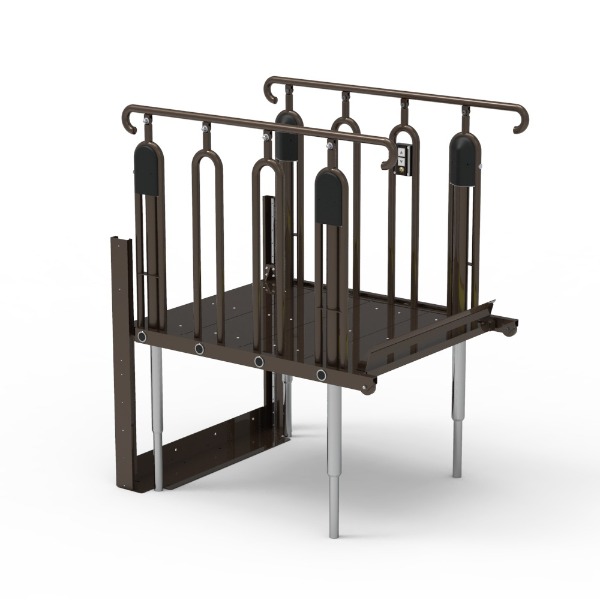
In modern manufacturing, accuracy is everything. Whether assembling precision components or packaging finished products for shipment, even small errors can lead to rework, waste, or customer dissatisfaction. As production lines become faster and more complex, companies are turning to lifting platforms as a practical solution to improve accuracy while maintaining efficiency. These platforms are no longer just tools for moving loads vertically—they are integral to precision-driven assembly and packaging operations.
The Link Between Ergonomics and Accuracy
One of the biggest contributors to errors on assembly and packaging lines is poor ergonomics. When workers must bend, stretch, or reach repeatedly, fatigue sets in quickly. Fatigue reduces focus, slows reaction time, and increases the likelihood of mistakes.
Lifting platforms address this issue by allowing workpieces to be positioned at an optimal height. An adjustable 升降台 ensures that components are always within a comfortable working zone, regardless of the operator’s height or the size of the product. When workers maintain neutral postures, they can concentrate on precision tasks rather than compensating for physical strain.
Consistent Positioning for Repeatable Results
Accuracy depends heavily on consistency. In assembly lines, components must align correctly every single time. In packaging, products must be placed, sealed, and labeled in the same position to meet quality standards.
Lifting platforms provide stable, repeatable vertical movement that manual handling simply cannot match. By using a 升降台 to raise or lower materials to a fixed working height, manufacturers eliminate variability caused by uneven stacks, pallet height differences, or shifting loads. This consistency directly translates into fewer assembly errors and more uniform packaging.
Reducing Handling Steps and Human Error
Every time a product is manually lifted, repositioned, or adjusted, there is an opportunity for error. Dropped components, misaligned parts, or incorrect placement often stem from excessive handling.
Integrating lifting platforms into production lines reduces the number of handling steps required. Materials can be lifted directly from pallets to the exact height needed for assembly or packing. In automated or semi-automated lines, a 升降台 can synchronize with conveyors and workstations, ensuring smooth transitions without manual intervention. Fewer touches mean fewer mistakes.
Supporting Precision Tools and Processes
Many assembly tasks rely on precision tools such as torque wrenches, vision systems, or robotic arms. These tools perform best when the workpiece is positioned accurately and consistently.
Lifting platforms create a stable foundation for these processes. For example, in electronics assembly, even slight height variations can affect soldering accuracy or component placement. By using an 升降台 to maintain a precise working level, manufacturers ensure that tools operate within their optimal parameters, improving overall process accuracy.
Improving Focus and Workflow
Accuracy is not just about physical positioning—it’s also about mental focus. Disorganized workflows, constant adjustments, and awkward movements break concentration and slow production.
When lifting platforms are properly integrated, workflows become smoother and more predictable. Operators know exactly where materials will be positioned and can develop efficient, repeatable routines. This clarity reduces cognitive load and allows workers to focus fully on quality-critical tasks. Over time, this leads to measurable improvements in both speed and accuracy.
Flexibility for Multiple Product Types
Many assembly and packaging lines handle a wide range of products with different sizes and weights. Fixed-height workstations struggle to accommodate this variety without compromising accuracy.
Adjustable lifting platforms solve this problem by offering flexibility without sacrificing precision. A single 升降台 can be quickly adapted for different product configurations, ensuring that each item is handled at the correct height and orientation. This adaptability is especially valuable in high-mix, low-volume production environments where changeovers are frequent.
Long-Term Quality and Cost Benefits
Improved accuracy has a direct impact on quality metrics and operational costs. Fewer errors mean less rework, lower scrap rates, and reduced returns. Over time, the investment in lifting platforms pays for itself through improved efficiency and consistent output.
Additionally, by reducing physical strain and fatigue, lifting platforms contribute to a healthier workforce. Workers who are comfortable and supported are more attentive and less likely to make mistakes, reinforcing a positive cycle of accuracy and quality.
Conclusion
In assembly and packaging lines, accuracy is the result of smart design, ergonomic support, and consistent processes. Lifting platforms play a crucial role in all three areas. By ensuring optimal working heights, reducing handling steps, and supporting precision tools, they help manufacturers achieve higher levels of accuracy without slowing down production.
As manufacturing continues to demand greater precision and flexibility, lifting platforms will remain a key component in building efficient, error-resistant assembly and packaging operations.